Seniors creating art together

Art Therapy for Alzheimer's & Dementia

When words fade, creativity speaks

A Bridge to Connection

There is a quiet grief that many families carry—the slow, aching sense of losing someone they deeply love to Dementia or Alzheimer's disease. Words fade. Recognition slips. The spark in the eyes seems further away…

But in the soft space of Art Therapy something remarkable happens. A brush touches paper, a familiar color is chosen, a quiet hum of forgotten tune arises. And for a moment—just a moment—connection returns.

Art therapy offers more than a creative outlet—it provides a vital, non-verbal lifeline for individuals living with dementia and Alzheimer's disease. As memory fades and language becomes less accessible, art therapy opens the door to emotional expression, memory activation, and meaningful connection.

Art, Empathy, and Presence Can Do What Language Sometimes Cannot

I Don't Treat Symptoms—I Meet People

Every individual is more than their diagnosis. I see the whole person, honoring their unique story and spirit.

I Don't Focus on What's Lost—I Focus on What Remains

Creativity, emotion, and the capacity for beauty endure. These are the gifts we celebrate and nurture.

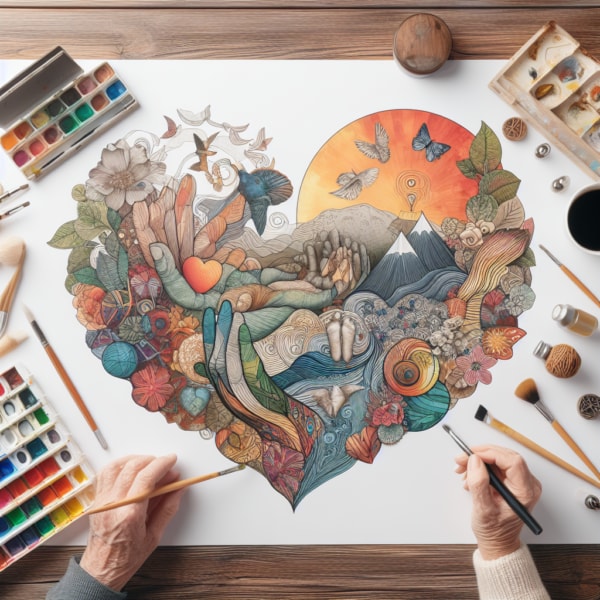
Heart-shaped nature artwork

When Words Are Lost, Creativity Speaks

Art therapy offers a safe, meaningful way for your loved one to connect, express, and thrive

Art therapy is brain-based, heart-centered, and soul-honoring. It is a clinically supported approach that uses creative expression to help individuals communicate, engage, and heal—especially when language and memory fade.

Here Is What Happens When Creativity Leads the Way

Cognitive Benefits

Engages Multiple Brain Regions Simultaneously

  • Visual Cortex (seeing)
  • Prefrontal Cortex (planning)
  • Motor Cortex (movement)
  • Limbic System (emotion)

Delays Progression of Symptoms

  • Regular creative engagement helps slow cognitive decline
  • Stimulates memory and thinking pathways
  • Encourages reminiscence and moments of clarity

Improves Attention and Focus

  • Art-making can increase attention span, even in moderate to late stages of dementia
  • Provides purposeful engagement
  • Creates structured, calming activity

Unlocks Long-Term Memory

  • Making art can unlock childhood or early life memories
  • These memories are often preserved longer than short-term memory
  • Sensory experiences trigger deep recall

Emotional and Psychological Benefits

Reduces Behavioral Issues

  • Can decrease agitation, aggression, and wandering
  • Calms the nervous system naturally
  • Provides constructive outlet when words fail

Creates Sense of Identity

  • Helps individuals reconnect with their inner self
  • Honors who they are beyond the diagnosis
  • Preserves dignity and personhood

Restores Sense of Purpose

  • Completing a project can instill pride and joy
  • Creates tangible accomplishments
  • Builds self-esteem and confidence

Allows Storytelling Without Words

  • Through drawing and painting, stories emerge
  • Reduces frustration from language loss
  • Provides alternative communication pathway

Physical Benefits

Engages Fine Motor Skills

  • Maintains hand dexterity and coordination
  • Supports hand-eye coordination
  • Keeps fingers and hands active

Encourages Sensory Integration

  • Tactile experiences with different materials
  • Visual stimulation through color
  • Supports healthy posture during activities

With Therapy Dog Support

Calms the Nervous System

Gentle presence reduces stress and anxiety

Builds Emotional Trust

Creates safe, non-judgmental environment

Supports Non-Verbal Individuals

Helps individuals feel safe and seen

Memory Activation

Triggers memories of beloved pets

Reduces Agitation

Soothing presence calms behavioral issues

Improves Quality of Life

Enhances emotional well-being naturally

Benefits for Care Facilities & Institutions

How art therapy programs enhance care quality and facility reputation

1. Enhances Care Efficiency

Reduces behavioral issues like agitation and aggression, allowing staff to provide better care with less interruption. Creates calmer, more manageable environment for all residents.

2. Reduces Medication Use

Lowers reliance on sedatives and antipsychotics by calming patients naturally through creative engagement. Offers holistic, non-pharmaceutical intervention.

3. Improves Facility Reputation

Families appreciate engaging, meaningful activities making your facility a top choice. Demonstrates commitment to quality of life, not just medical care.

4. Offers Measurable Results

Mood and engagement tracking tools help you show impact and improve care plans. Provides documentation for families and regulatory requirements.

5. Activates the Environment

Resident-created art decorates halls and common areas, building pride and positive energy. Transforms institutional spaces into vibrant, personalized communities.

Why Choose Me

Choosing someone to care for your loved one—especially in the vulnerable journey through Alzheimer's or Dementia—is not about credentials. It's about heart, presence, and trust.

I specialize in art therapy for individuals living with memory loss. I understand the confusion, the fear, and the moments of silence. But I also know this: connection is always possible.

Through color, shape, texture—and sometimes simply through presence—I help your loved one express what they can no longer say.

Want to bring art therapy to your care program?

I am a European-trained facilitator who can tailor sessions to all cognitive stages—from early memory care to advanced dementia. Each session is designed with compassion, expertise, and deep respect for the individual's journey.

Practical Tips for Families

Simple ways to bring art therapy into your daily life

1

No Artistic Talent Required

Art therapy is not about creating masterpieces. Focus on expression, not skill. There is no right or wrong way to create. The process itself is what matters, not the final product.

2

Use Simple Tools

Start with basic, accessible materials: paper, markers, colored pencils, magazines for collage, or watercolors. Keep supplies simple and non-intimidating.

3

Adapt to Abilities

Tailor activities to your loved one's current abilities. Try finger painting for tactile engagement, simple coloring for those who prefer structure, or tearing paper for collage if fine motor skills are challenging.

4

Create a Regular Routine

Make creative time part of a regular routine. Consistency provides comfort and something to look forward to. Even 20-30 minutes of creative time can make a difference.

5

Follow Their Lead

Let your loved one guide the creative process. If they want to use only one color, that's perfect. If they prefer to watch rather than participate, that's okay too. Honor their choices.

6

Create Together

Sit beside your loved one and create your own art. This removes pressure and creates a shared experience. You're not teaching - you're creating together.

Simple Activities to Try at Home

Watercolor Exploration

Provide watercolors and thick paper. Let your loved one explore how colors blend and flow. No instructions needed - just the joy of watching colors dance on paper.

Memory Collage

Cut images from magazines together. Create a collage based on colors, themes, or whatever catches their eye. The process of choosing and arranging is therapeutic.

Texture Exploration

Use materials with different textures - tissue paper, fabric scraps, sandpaper. The sensory experience engages memory and provides calming tactile stimulation.

Simple Coloring

Adult coloring books with simple, bold designs can be soothing and provide a sense of accomplishment. Choose images that relate to their interests or past experiences.

Nature Art

Collect leaves, flowers, or small stones. Arrange them on paper or create simple nature prints. Connecting with natural materials can be deeply calming.

Clay Work

Soft clay or play dough provides wonderful tactile engagement. No need to create anything specific - just the act of molding and shaping is therapeutic.

You Don't Have to Navigate This Alone

Professional art therapy can provide guidance, support, and meaningful engagement for your family.

If you'd like support in bringing art therapy into your loved one's life, I'm here to help. Together, we can create moments of connection, dignity, and joy through the transformative power of creative expression.

Contact Me Today